Thank you!
An Ooma AirDial Sales Representative will be in touch shortly.
866-839-5810



Get your custom quote.
Let’s talk and see how much you can save with Ooma AirDial.

We’ll follow up within a business day.

We’ll help you analyze whether Ooma AirDial is a good solution for your needs.

A custom quote will be generated.

Generate Your Personalized POTS Line Replacement Business Case
Get the information needed to build your case for POTS replacement. Create a customized business case document that shows how much your organization can expect to save by replacing POTS lines with Ooma AirDial.
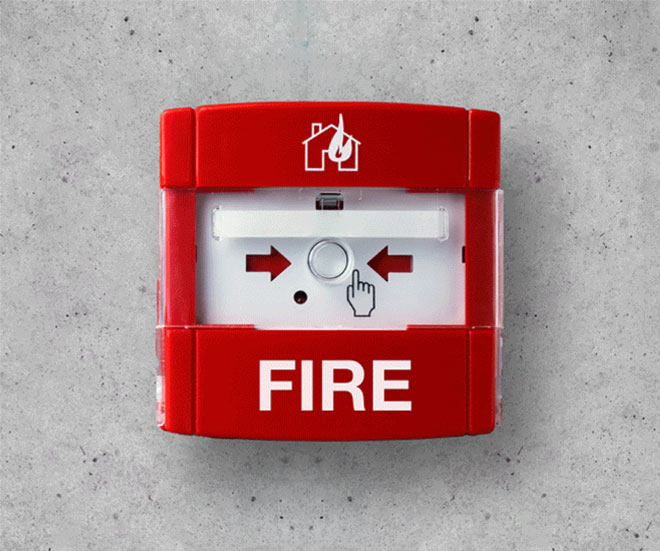
Still using POTS lines? See where they still support critical systems.
Check POTS ReadinessCall sales at:
866-902-6765
How to prepare for landline service shutdown
Author: Tonya Hottmann
Key Points:
- Start with a complete inventory of every POTS line and the systems each one supports before carrier deadlines arrive.
- Prioritize life-safety systems such as fire alarms, elevator phones, and area-of-refuge communications during migration planning.
- Choose a replacement solution that meets applicable compliance requirements and works with existing equipment.
- A phased, proactive migration reduces costs, minimizes disruption, and avoids last-minute compliance risks.
- Centralized monitoring and alerts provide greater visibility than legacy copper lines ever could.
Carriers across the country are accelerating the retirement of copper phone lines. AT&T has committed to ending all POTS service by 2029, physical decommissioning of the first wave of wire centers began in June 2026, and in March 2026 the FCC removed key regulatory hurdles that once slowed carriers from retiring legacy networks. The window for a planned, proactive migration is narrowing.
For many organizations, the copper shutdown will not arrive as a single dramatic event. It will arrive quietly through a termination notice for a line that has been running unnoticed for years, supporting a fire alarm panel, an elevator phone, a gate entry system, or a fax machine.
Reviewing phone bills and conducting a proper audit frequently reveals more than expected: lines that are still being billed but no longer active, and in some cases, critical systems with no active line at all. The time to start that audit is now, before a carrier notice sets the timeline.
Step 1: Discovery — build your inventory
The discovery step is where the migration plan takes shape. Before making decisions, it helps to have a clear picture of what is currently in place: how many lines are being billed, where they are located, and what each one supports.
Phone bills are often not reviewed regularly, and when they are, the review sometimes surfaces unexpected findings: lines connected to devices that are no longer active, or gaps where critical systems have less coverage than assumed.
Discovery checklist
- Inventory every POTS line by reviewing all phone bills.
- Validate the physical location of each line.
- Map every line to the device it supports, such as a fire alarm panel, elevator phone, gate entry system, or fax machine.
- Identify critical versus non-critical lines and prioritize life-safety systems.
- Review vendor and carrier contracts for migration considerations.
- Identify stakeholders across facilities, IT, compliance, finance, and legal.
- Build a business case using current costs, projected increases, and operational risks.
- Create an action plan with timelines based on contracts and compliance requirements.
Step 2: Selection — choose the right solution
Not all POTS replacement solutions are equal. For life-safety applications, the wrong choice can create a compliance gap rather than solving one. Standard VoIP does not qualify as a replacement for fire alarm communication paths under NFPA 72, which requires a Managed Facilities-based Voice Network (MFVN) where traffic does not traverse the public internet.
Selection checklist
- Confirm the solution is available through your procurement process or purchasing contract.
- Evaluate reliability, redundancy, and uptime capabilities.
- Verify applicable compliance certifications and approvals, including NFPA 72 MFVN, ASME A17.1 support, California State Fire Marshal listing, FDNY approval, and UL certifications where applicable.
- Confirm compatibility with existing equipment through standard RJ-11 connections.
- Evaluate migration risks and expected service continuity during installation.
- Review the vendor’s experience, support model, and project management capabilities.
- Compare operational features such as remote monitoring, alerts, battery status, and port-level visibility.
- Ensure the platform supports centralized management across multiple locations.
Step 3: Installation — execute the migration
A planned migration is significantly less expensive and disruptive than a reactive one driven by a carrier shutdown notice. Organizations managing multiple buildings often benefit from phased deployments that prioritize locations with aging infrastructure, rising costs, or greater compliance exposure.
Installation checklist
- Verify equipment compatibility before installation.
- Coordinate installation with fire alarm contractors and elevator maintenance providers for life-safety systems.
- Install the replacement unit at the demarc using a standard RJ-11 connection.
- Perform end-to-end testing with the monitoring station before considering the installation complete.
- Port existing telephone numbers to avoid changes with monitoring centers or dispatch providers.
- Confirm every line is active before disconnecting copper service.
- Document installation results, testing, and AHJ approvals for future inspections.
Step 4: Management — maintain ongoing visibility
Replacing copper lines does not eliminate operational oversight. It improves it. Modern POTS replacement solutions provide real-time visibility into devices that traditional copper infrastructure never offered.
Management checklist
- Verify all devices appear in the management portal with current service, battery, and LTE status.
- Assign appropriate user permissions to facilities, IT, and contractors.
- Configure SMS and email alerts for offline events, low battery conditions, power outages, and emergency calls.
- Add newly migrated locations into the same centralized management platform.
- Maintain inspection records, testing history, and AHJ documentation for compliance purposes.
What not to do
- Don’t treat it like a simple line replacement. A compliant migration requires more than replacing a telephone line.
- Don’t implement one-off fixes. Coordinated migrations improve consistency, reduce costs, and simplify compliance.
- Don’t wait for failures. Planned migrations are less disruptive than reacting to a 90-day shutdown notice.
- Don’t ignore compliance. NFPA 72, ASME A17.1, and AHJ requirements continue to apply after migration.
- Don’t increase complexity. Multiple vendors can create fragmented billing, support, and accountability.
- Don’t wait until the last minute. Carrier retirements will create increasing demand for procurement, installation, and inspections.
The bottom line
The retirement of copper voice services is not a future concern. It is a present-day operational risk for organizations that depend on POTS for critical systems.
A proactive plan that begins with a complete inventory, prioritizes life-safety devices, selects a compliant replacement solution, and incorporates centralized management helps reduce disruption, minimize compliance exposure, and maintain control over the migration timeline.
The time to start is now, before a carrier shutdown or compliance failure forces the decision.


