Thank you!
An Ooma AirDial Sales Representative will be in touch shortly.
866-839-5810



Get your custom quote.
Let’s talk and see how much you can save with Ooma AirDial.

We’ll follow up within a business day.

We’ll help you analyze whether Ooma AirDial is a good solution for your needs.

A custom quote will be generated.

Generate Your Personalized POTS Line Replacement Business Case
Get the information needed to build your case for POTS replacement. Create a customized business case document that shows how much your organization can expect to save by replacing POTS lines with Ooma AirDial.
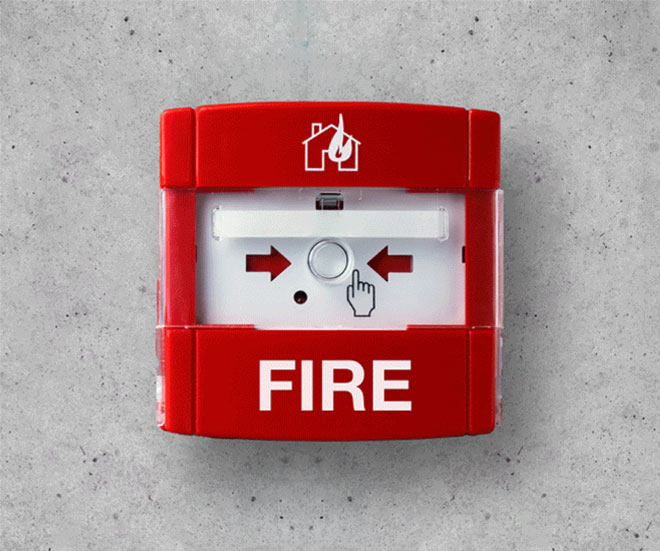
Still using POTS lines? See where they still support critical systems.
Check POTS ReadinessCall sales at:
866-902-6765
The true cost of delaying POTS replacement
Author: Kathy Mazza
Key Points:
- Delaying POTS replacement means continuing to pay rising copper line costs with no expectation of lower future pricing.
- A terminated line supporting life-safety systems can trigger fire watch, elevator shutdowns, or loss of alarm monitoring.
- Organizations that migrate proactively avoid emergency timelines and costly reactive projects.
- Every month of delay increases financial, operational, and compliance risk as copper retirement accelerates.
- Planning ahead provides greater control over costs, scheduling, and regulatory compliance.
Every month an organization delays replacing its POTS lines, the cost of that delay compounds. Four distinct costs do not wait for a termination notice to begin.
Cost 1: Excess monthly charges that never stop
The most immediate and measurable cost of delay is the monthly line charge itself. The FCC removed pricing protections on copper lines in August 2022. Since then, rate increases of 200% to 400% on individual POTS lines have been documented across multiple markets.
Every month an organization stays on copper is another month of paying those elevated rates, with no ceiling and no reversal mechanism. The savings from migration begin immediately once the copper lines are replaced. Every month of delay is money that cannot be recovered.
Cost 2: Compliance events that begin the moment a line is terminated
For life-safety systems, the cost of a terminated copper line extends far beyond replacing the service. Once communication is lost, mandatory compliance responses may begin immediately and continue until the system is restored.
- Fire alarm panels — Mandatory fire watch. A terminated copper line is considered an impaired system under NFPA 72. Many jurisdictions require a fire watch costing between $500 and $2,000 per day until communications are restored, tested, and approved by the AHJ. A two-week reactive migration can result in $7,000 to $28,000 in fire watch expenses alone.
- Elevator emergency phones — Elevator shutdown orders. A non-functioning elevator phone may violate ASME A17.1 requirements, potentially leading to failed inspections, elevator shutdowns, tenant disruption, and increased liability.
- Security alarm panels — Silent monitoring failures. Monitoring centers may stop receiving alarm signals without any obvious indication at the panel, leaving buildings effectively unmonitored.
Cost 3: The reactive migration premium
Organizations that begin migrating before receiving a carrier termination notice control their schedule, vendor selection, budgeting, and rollout strategy. Organizations forced to migrate within a 90-day carrier deadline often encounter additional costs and operational challenges that proactive planning helps avoid.
Industry experience consistently shows that reactive migrations carry greater compliance risk for every additional day required to complete the project.
Cost 4: The cost trajectory only goes one direction
There is no realistic scenario in which waiting becomes less expensive.
- Copper rates continue to rise. The regulatory framework that once limited pricing no longer exists. As carriers maintain aging infrastructure for fewer customers, costs continue shifting to those who remain on copper.
- Carrier retirements continue to accelerate. AT&T has committed to retiring virtually all copper service by 2029, while FCC actions continue reducing regulatory barriers that previously slowed network retirement.
Planned vs reactive migration
| Category | Planned Migration | Reactive Migration |
|---|---|---|
| Timeline control | On your schedule | Carrier’s 90-day deadline |
| Monthly line costs | Eliminated after migration | Continue until migration is complete |
| Fire watch costs | Typically avoided | $500–$2,000 per day during impairment |
| Compliance documentation | Prepared in advance | Compressed timelines with greater risk of delays |
| Elevator operations | No planned interruption | Potential shutdown during migration |
The bottom line
The true cost of delaying POTS replacement is more than the monthly phone bill. It includes rising service charges, compliance-related expenses, operational disruptions, and the additional costs that come with compressed migration timelines.
Organizations that migrate before a carrier notice arrives maintain control over scheduling, budgeting, and compliance. Organizations that wait continue paying higher copper costs and may face mandatory fire watch, elevator downtime, or other avoidable expenses if service is terminated before migration is complete.
The question is not whether to migrate. It is whether to do it on your schedule or the carrier’s.


