Thank you!
An Ooma AirDial Sales Representative will be in touch shortly.
866-839-5810



Get your custom quote.
Let’s talk and see how much you can save with Ooma AirDial.

We’ll follow up within a business day.

We’ll help you analyze whether Ooma AirDial is a good solution for your needs.

A custom quote will be generated.

Generate Your Personalized POTS Line Replacement Business Case
Get the information needed to build your case for POTS replacement. Create a customized business case document that shows how much your organization can expect to save by replacing POTS lines with Ooma AirDial.
Still using POTS lines? See where they still support critical systems.
Check POTS ReadinessCall sales at:
866-902-6765
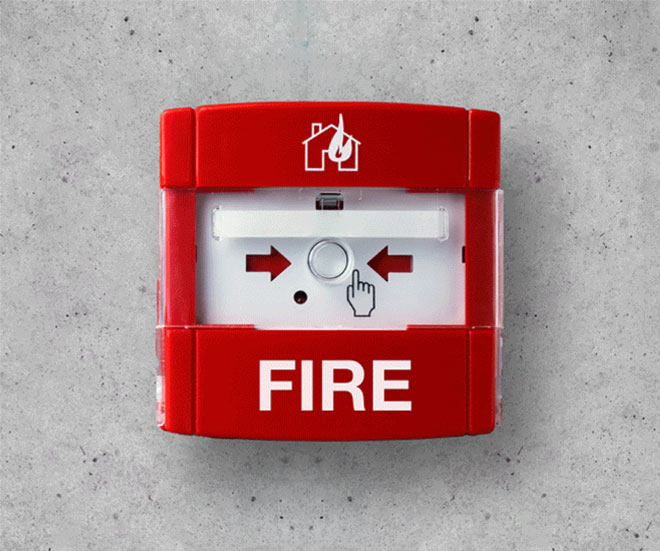
My fire alarm panel lost communication. What do I do?
Author: Tonya Hottmann
Key Points:
- A fire alarm panel that loses communication with its monitoring station requires immediate attention.
- Contact your monitoring provider, notify the AHJ, and follow any required impairment procedures, including fire watch if directed.
- The most common causes include retired copper lines, carrier outages, DACT failures, and wiring issues.
- If the copper line has been discontinued, replacing the communication path—not repairing the line—is typically the solution.
- Restoring communications quickly can reduce operational disruption and the duration of any required fire watch.
A fire alarm panel that cannot communicate with its monitoring station cannot report an alarm. Under NFPA 72, this is considered a system impairment that requires an immediate response.
If your panel has lost communication, the priority is to restore the communication path safely and as quickly as possible. Here’s what to do first—and what may have caused the problem.
Do these three things now
Call your monitoring company
Notify them immediately that the panel has lost communication. They can log the impairment, verify signal status, and advise on the next steps.
Notify your AHJ
NFPA 72 requires notification of the Authority Having Jurisdiction (AHJ), typically the local fire marshal. Confirm that this notification has been made.
Implement fire watch if required
Many jurisdictions require a continuous physical fire watch until communications have been restored, tested, and approved for normal operation.
What likely caused it?
Most fire alarm communication failures fall into one of four categories.
1The copper line was terminated
This is one of the most common causes today. Carriers across the country are retiring legacy copper infrastructure, and service discontinuation notices don’t always reach the right person.
Contact your carrier to determine whether the line is still active. If it has been permanently discontinued, restoring service typically requires replacing the communication path rather than repairing the existing line.
2A carrier fault or outage
Even if the line hasn’t been retired, a service interruption or line fault can prevent signals from reaching the monitoring station.
Contact your carrier immediately and open a repair ticket. Keep in mind that any required fire watch generally remains in effect until communications have been restored and verified.
3The DACT has failed
The Digital Alarm Communicator Transmitter (DACT) inside the fire alarm panel can fail independently of the telephone line.
Your licensed fire alarm contractor can test the communicator to determine whether the panel or another component is causing the communication failure.
4A wiring issue at the demarcation point
A loose, damaged, or corroded connection between the panel and the building’s demarcation point can interrupt communications without affecting other building systems.
Your contractor can inspect the wiring and isolate the source of the fault.
If the copper line is gone
If the carrier has permanently discontinued the copper line, repairing the existing telephone service is no longer an option.
For fire alarm communications, the replacement solution should be selected in consultation with your fire alarm contractor, monitoring provider, and AHJ to ensure it meets the technical and code requirements for your application.
Many purpose-built POTS replacement solutions install at the demarcation point using a standard RJ-11 connection, allowing the existing fire alarm panel and monitoring receiver to remain in service while replacing only the communication path.
When does fire watch end?
Fire watch requirements vary by jurisdiction, but they generally remain in place until:
- The communication path has been restored.
- The system has been successfully tested.
- The monitoring station confirms it is receiving signals correctly.
- Any required documentation has been completed.
- The AHJ or other responsible authority approves returning the system to normal operation.
The sooner communications are restored and verified, the sooner normal building operations can resume.
The bottom line
A lost communication signal doesn’t always mean the fire alarm panel itself has failed. In many cases, the issue lies with the communication path connecting the panel to the monitoring station.
Whether the cause is a retired copper line, a carrier outage, a failed communicator, or damaged wiring, identifying the root cause quickly is the fastest path to restoring service and minimizing operational disruption.
If your fire alarm panel loses communication, respond immediately, involve your monitoring provider and licensed contractor, and determine whether the issue is with the communication path or the panel itself. Acting quickly can help restore service sooner and reduce the impact on your facility.


