Thank you!
An Ooma AirDial Sales Representative will be in touch shortly.
866-839-5810



Get your custom quote.
Let’s talk and see how much you can save with Ooma AirDial.

We’ll follow up within a business day.

We’ll help you analyze whether Ooma AirDial is a good solution for your needs.

A custom quote will be generated.

Generate Your Personalized POTS Line Replacement Business Case
Get the information needed to build your case for POTS replacement. Create a customized business case document that shows how much your organization can expect to save by replacing POTS lines with Ooma AirDial.
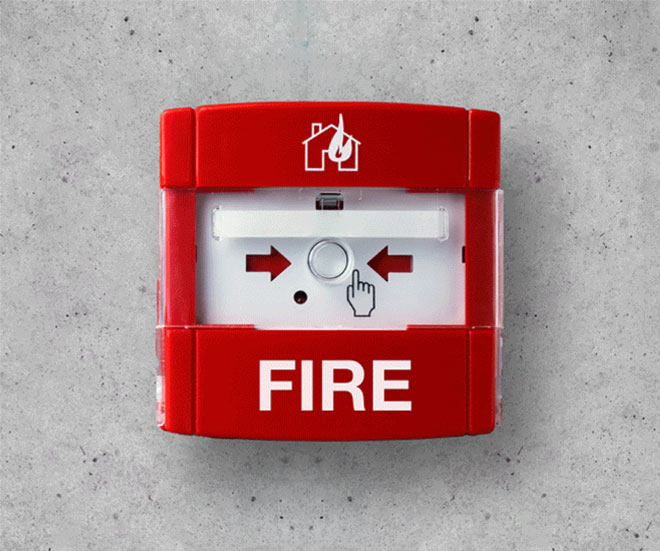
Still using POTS lines? See where they still support critical systems.
Check POTS ReadinessCall sales at:
866-902-6765
What happens if I keep my existing POTS lines?
Author: Kathy Mazza
Key Points:
- Keeping existing POTS lines may postpone the transition, but it does not eliminate the need to replace them.
- Legacy-line costs and repair challenges may increase as carriers shift investment away from copper infrastructure.
- An unexpected disconnection can impair fire alarms, elevator phones, security systems, and other critical equipment.
- Planning early provides more time to audit dependencies, obtain approvals, coordinate contractors, and test replacement services.
It is a fair and reasonable question. If the lines are working, the systems connected to them are running, and no one has detected a problem, it can be hard to see why changing anything is urgent.
But here is the direct answer: POTS lines are going away. Major carriers are actively retiring legacy copper infrastructure, and the transition is already underway in many markets.
For organizations that still depend on POTS lines, the practical question is whether to migrate on a planned schedule, with time to evaluate requirements and coordinate contractors, or wait until rising costs, a service failure, or a carrier deadline forces the decision.
Here is a clear-eyed look at what continuing to rely on copper lines may mean over the next few years and what to do about it.
1. Your costs may continue to rise
Many organizations have already experienced substantial increases in the cost of maintaining legacy copper lines.
- Carriers are serving fewer customers over aging copper infrastructure.
- The fixed cost of maintaining that infrastructure is spread across a shrinking customer base.
- Legacy services may also include carrier surcharges, access charges, taxes, and other fees.
- Organizations with many locations or lines can see even modest per-line increases become a significant operating expense.
The long-term economics are unlikely to become more favorable as carriers continue shifting investment toward fiber, wireless, and IP-based services.
2. The lines may eventually be retired
Keeping existing POTS lines is not a permanent strategy. Carriers are actively retiring copper facilities and transitioning customers to newer network technologies.
- AT&T has stated that it plans to stop providing service over the large majority of its domestic copper-based network by the end of 2029.
- Verizon and other carriers continue filing notices for copper retirement in individual wire centers and service areas.
- When copper facilities are permanently retired, customers may need to migrate affected services to another available platform.
- The amount and type of notice can depend on the network change, service being discontinued, customers affected, and applicable federal or state requirements.
Important distinction: A copper-retirement notice describes a change to the carrier’s network infrastructure. A separate service-discontinuance process may apply when the carrier plans to discontinue, reduce, or impair a regulated telecommunications service. Review any notice carefully to determine what is changing and which dates apply.
The transition may happen on your schedule or in response to a carrier deadline. Starting early gives you more time to understand your dependencies and select an appropriate replacement.
3. Life-safety systems face specific risks
For organizations with fire alarm panels, elevator emergency phones, security dialers, or other critical equipment connected to copper lines, an unplanned service loss may create compliance consequences in addition to operational disruption.
- A fire alarm panel that loses its communication path may need to be handled as an impaired system under applicable fire codes and local procedures.
- The local Authority Having Jurisdiction may require notification, corrective action, or temporary safeguards while communication is restored.
- A fire watch may be required in some situations, creating substantial staffing and operational costs.
- An elevator emergency phone that cannot complete a call may result in an inspection deficiency or the elevator being removed from service until the issue is corrected.
- Security dialers and other monitored equipment may stop transmitting without an obvious outward sign of failure.
These consequences do not necessarily mean the organization did anything wrong. They result from a critical system losing the communication path it needs to operate as intended.
A planned migration reduces the risk of discovering the problem during an inspection, outage, or emergency.
4. Repair and support may become less predictable
There is also a day-to-day reliability consideration.
- Aging copper facilities are increasingly difficult and expensive for carriers to maintain.
- Weather, construction damage, cable theft, corrosion, and equipment age can affect service.
- Repair availability and response times may vary as carriers reduce reliance on legacy infrastructure.
- For life-safety and critical building systems, an extended repair period can create more than a routine inconvenience.
AT&T has acknowledged that its aging copper network is increasingly difficult to support and is subject to frequent outages, including outages caused by copper theft.
5. Waiting reduces your options
One of the less visible consequences of staying on copper is the effect it can have on planning flexibility.
- A carrier deadline may leave limited time to identify every device connected to the affected lines.
- Life-safety migrations may require coordination with fire alarm contractors, elevator service providers, monitoring companies, and local authorities.
- Replacement services need to be evaluated for compatibility, backup power, reliability, and applicable compliance requirements.
- Reactive procurement leaves less time to compare options, gather documentation, and complete testing.
Organizations that plan the transition on their own schedule generally have more control over cost, installation timing, contractor coordination, and testing.
The benefit of moving proactively is not simply financial. It is the ability to complete the work carefully and verify that every connected system continues operating correctly.
What to do next
If no retirement notice has arrived and everything is currently working, that is good news. It means you may have time to approach the transition methodically rather than under immediate deadline pressure.
Start by answering a few practical questions:
POTS line planning checklist
- How many copper lines are you currently paying for?
- Where is each line located?
- What device or system is connected to each line?
- Which lines support life-safety, security, or compliance-related systems?
- Have any associated wire centers been included in carrier retirement notices?
- What contractors, monitoring providers, and local authorities need to be involved in a transition?
A POTS line replacement assessment can help answer these questions. It maps existing lines, identifies connected systems, surfaces hidden dependencies and costs, and provides a clearer picture of what a transition would involve.
AT&T has reiterated that it intends to stop providing service over the large majority of its domestic copper-based network by the end of 2029, while Verizon continues publishing location-specific copper-retirement notices.
Keeping your existing POTS lines may be possible for now, but it does not remove the need to plan for their eventual replacement. The good news is that organizations with an accurate inventory, the right technical documentation, and a clear migration plan can make the transition in manageable phases rather than responding to an emergency.


